
The Argument Between Theory and Evidence
A Journey to the Centre of the EarthThis thread traces how the expedition repeatedly unsettles inherited scientific assumptions and exposes the limits of confident explanation.
increasing Bearing strength in each event
 decreasing
Bearing strength in each eventdecreasingHeat Before the Journey
Heat Before the Journey
A theoretical barrier
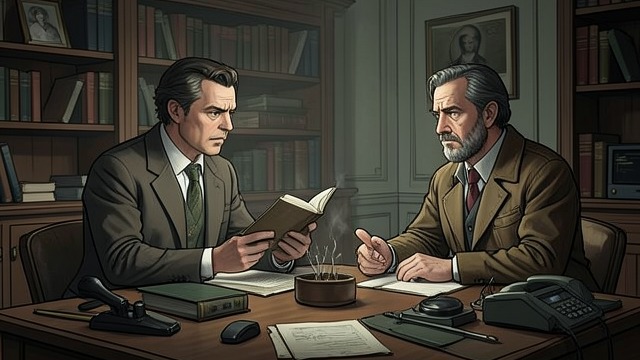
Henry argues that increasing heat with depth should make a journey toward the center impossible. Professor Hardwigg rejects the authority of established theories when they conflict with direct investigation.
Their disagreement establishes the book’s recurring tension: explanation can predict danger, but observation may challenge the framework from which the prediction came.
The wager of experience
The Professor treats the journey itself as a method for learning what cannot be settled from the surface. Henry is less certain that the risk is justified by the possible knowledge.
The expedition begins as a practical experiment in whether inherited scientific models can survive contact with the unknown.
The Subsurface Contradiction
The Subsurface Contradiction
Instruments and expectations
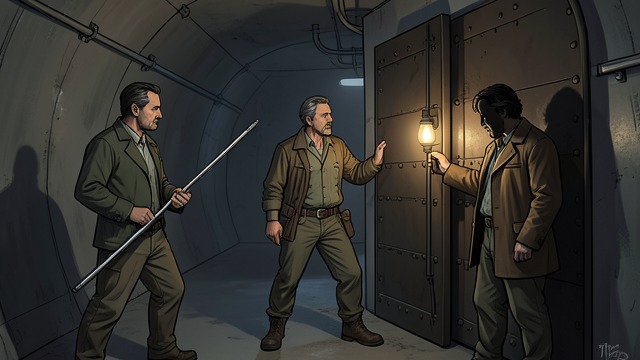
The travelers monitor temperature and pressure as they descend, expecting the readings to clarify their position. The measured heat remains far lower than Henry’s conventional expectations would predict.
Professor Hardwigg takes the discrepancy as support for an alternative account of the interior. Henry considers whether the rock’s local properties might explain the difference without disproving the broader pattern.
Competing interpretations
The same observations therefore support different conclusions. The instruments provide data, but they do not independently decide which theory best explains it.
The journey makes scientific disagreement concrete: the explorers inhabit the evidence while still interpreting it through competing models.
Geological Time in View
Geological Time in View
Strata become evidence
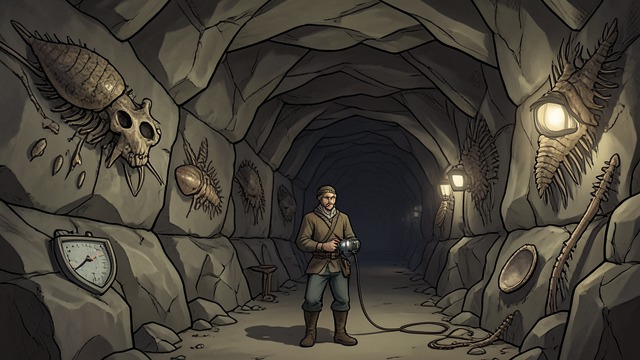
Henry recognizes fossils and successive rock formations that suggest the travelers have left the expected volcanic route. Trilobites and later marine remains make geological chronology present in the tunnel walls.
The Professor initially continues forward, then acknowledges that Henry’s evidence supports the conclusion that the party has taken the wrong route. Scientific observation can correct authority, even when correction comes late.
A world older than memory
The coal formation and fossil deposits connect the underground passage to immense changes in the earth’s past. The travelers’ immediate danger unfolds inside a history far greater than human lifetimes.
Their observations enlarge the story from adventure into a study of how material traces reconstruct vanished environments.
Living Fossil Evidence
Living Fossil Evidence
Categories become encounters
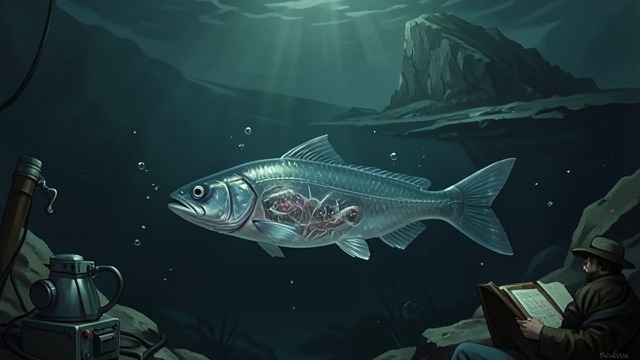
The Central Sea yields blind fish identified as Pterychtis and Dipterides, species the travelers know as fossils. Their living presence unsettles the distinction between extinct geological eras and the present moment.
Later discoveries of prehistoric creatures and ancient human remains intensify the challenge. The travelers’ observations are so extraordinary that they will be difficult to persuade others to accept.
Witness and credibility
Professor Hardwigg’s confidence rises with each discovery, while Henry remains attentive to what can and cannot be concluded. Their testimony will become a public scientific claim after they return.
The expedition presents discovery as both an encounter with reality and a problem of how other people can verify a witness’s account.
Knowledge Without Finality
Knowledge Without Finality
Recognition and controversy
Hardwigg’s report attracts attention and dispute because its observations challenge established accounts of the earth’s interior. The expedition provides unusual evidence, but it does not settle every question about heat or geological structure.
Henry continues to believe that central heat may still be real, even though the journey has shown that local conditions complicate simple laws. Their experience encourages modification rather than effortless certainty.
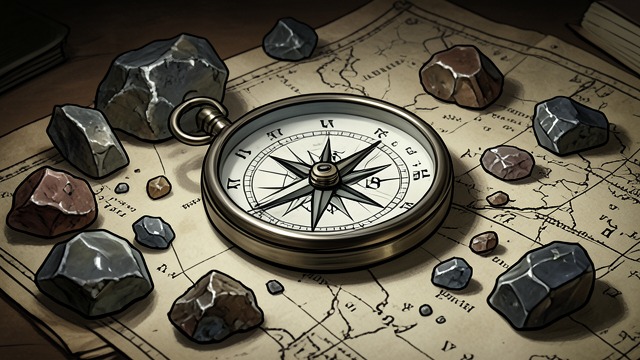
The compass as correction
The final explanation of the reversed needle resolves a navigational puzzle through the storm’s electrical effects. A previously baffling event becomes understandable only after a later observation.
The story ends with scientific confidence tempered by revision: facts can upset theories, but explanations themselves remain open to further evidence.
Before the party leaves Hamburg
June 29 and 30, after the first descent
Early July, as fossils appear beyond the lava
From the first fish catch to the fossil plain
Six months after the party returns, as the compass is examined
